The Hidden Problem: Why Your Attic Isn't Performing
If you're a homeowner in Youngstown, you've likely noticed the telltale signs of an inefficient attic. Ice dams forming along your roofline in winter. Bedrooms that stay cold no matter how high you turn up the heat. Rising energy bills that seem to climb every season. These problems feel like they demand more insulation, but the real culprit is often something far more fundamental: air leaks.
Most homes, especially older ones, have attics riddled with gaps, cracks, and unsealed penetrations that allow conditioned air to escape and unconditioned air to infiltrate. When warm air leaks into the attic during winter, it melts snow on your roof, which refreezes at the eaves, creating ice dams. When your upstairs bedrooms stay cold, it's because heated air is escaping through those same gaps rather than staying where you need it. Adding more insulation without sealing these leaks is like pouring water into a bucket with holes in the bottom. You're spending money without solving the real problem.
Air Sealing: The Foundation of Effective Attic Performance
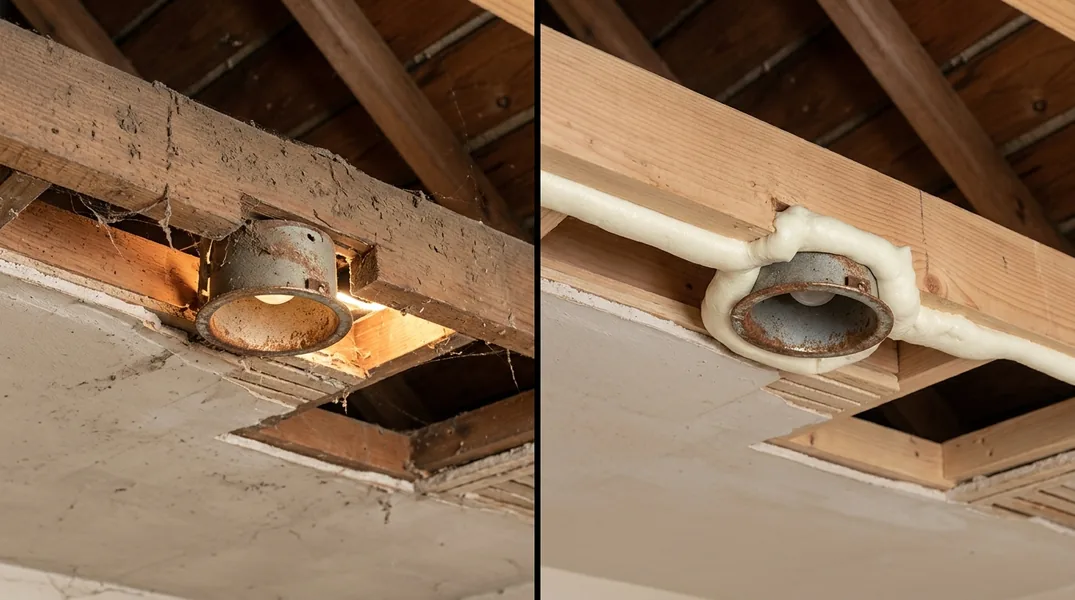
Before any Attic Spray Foam Insulation project should begin, a thorough air sealing process must take place. Air sealing involves identifying and closing every penetration in your attic floor, rim joists, and band boards where conditioned air can escape. Common culprits include gaps around electrical outlets, plumbing vents, HVAC ducts, recessed lighting fixtures, and the attic hatch itself. In Youngstown, where winters are cold and heating costs run high, these air leaks represent hundreds of dollars in wasted energy every year.
The air sealing process typically uses a combination of caulk, weatherstripping, foam board, and spray foam to seal gaps and cracks. This creates a continuous air barrier that prevents conditioned air from escaping into the attic space. Once the attic is properly sealed, insulation can do its job effectively. Without this foundation, even premium insulation will underperform because air movement will bypass it entirely. Think of it this way: insulation slows heat transfer through materials, but it cannot stop air from flowing through gaps. Air sealing addresses the gaps; insulation then handles the rest.
How Unvented Attic Spray Foam Solves Multiple Problems at Once
Closed Cell Spray Foam Insulation applied to the underside of your roof deck creates what's called an unvented attic. This approach combines air sealing and insulation in a single application, making it one of the most effective solutions for homes struggling with ice dams, cold rooms, and energy waste. When spray foam is applied directly to the interior of the roof, it seals every gap, crack, and penetration while simultaneously providing high R-value insulation. The foam adheres tightly to rafters, roof decking, and any obstructions, creating an airtight thermal envelope.
An unvented attic has another significant advantage: it eliminates Youngstown homeowners' concerns about condensation in attic spaces. In a traditional vented attic, warm, moist air from your living space rises into the attic, where it meets cold roof surfaces during winter. This temperature difference causes moisture to condense, leading to mold, rot, and structural damage. With spray foam creating an unvented attic, your living space is completely separated from the outdoor environment. The attic becomes part of your conditioned space, so temperature and humidity remain stable. This solves the ice dam problem at its source: there's no warm air leaking into the attic to melt snow in the first place.
Understanding Attic Moisture Problems and Why Prevention Matters
Attic moisture problems are among the most expensive issues homeowners face. Moisture leads to mold growth, which poses health risks and can spread throughout your home. It causes wood rot in rafters and joists, compromising structural integrity. It reduces the effectiveness of fiberglass or cellulose insulation, which loses R-value when damp. In severe cases, moisture damage can cost tens of thousands of dollars to remediate. The good news is that proper air sealing followed by spray foam insulation prevents these problems from developing in the first place.
When you seal your attic properly with spray foam, you're creating a moisture-resistant barrier that keeps humid air from entering the attic space. The closed-cell foam itself is impermeable to water vapor, adding an extra layer of protection. This is especially important in the Ohio climate, where seasonal temperature swings and humidity fluctuations create ideal conditions for condensation problems. By addressing air sealing before or during your insulation upgrade, you're investing in decades of protection against costly moisture damage.
The Right Approach: Air Sealing First, Then Insulation
The most cost-effective and efficient approach to upgrading your attic is to prioritize air sealing before adding more insulation. If your home has existing fiberglass batts or blown-in cellulose, those materials should remain in place while you focus on closing gaps and penetrations. This might involve removing insulation from specific areas, sealing the gaps underneath, and then replacing the insulation. Alternatively, spray foam applied to the roof deck serves as both air barrier and insulation, eliminating the need for this two-step process.
The choice between Closed Cell Spray Foam Insulation and Open Cell Spray Foam Insulation depends on your specific goals and budget. Closed-cell foam offers higher R-value per inch, superior air sealing, and moisture resistance, making it ideal for unvented attics. Open-cell foam is more affordable and provides good air sealing with a slightly lower R-value. Both options outperform traditional insulation when it comes to stopping air infiltration and preventing ice dams.
Getting Started: Attic Spray Foam Insulation Near Me
If you're ready to address ice dams, cold bedrooms, and high heating bills, the first step is a professional assessment of your attic. A qualified contractor will identify air leaks, evaluate your current insulation, assess moisture conditions, and recommend the best solution for your home. For homeowners in Youngstown and surrounding areas like Boardman and Austintown, Youngstown Spray Foam Insulation offers comprehensive attic solutions backed by years of local experience. We understand the specific challenges that Youngstown homeowners face and provide tailored recommendations.
Don't wait for another winter of ice dams or another month of uncomfortable bedrooms. Contact Youngstown Spray Foam Insulation today for a free estimate. Call us at (330) 406-5409 to discuss your attic concerns and learn how air sealing combined with spray foam insulation can transform your home's comfort and energy efficiency. Our team is ready to help you take control of your attic performance and enjoy the lasting benefits of a properly sealed and insulated space.
Looking for a professional spray foam insulation contractor in Youngstown? Youngstown Spray Foam Insulation responds fast for all your spray foam insulation needs.
Get a Free Quote