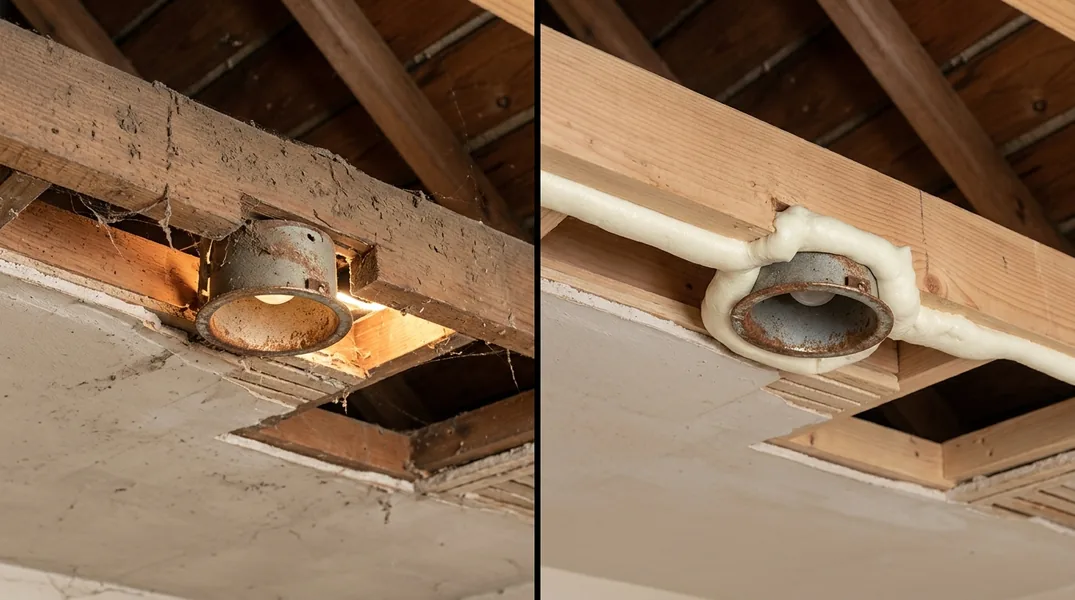
Understanding Spray Foam vs Blown-In Insulation
When homeowners in Youngstown start researching attic insulation, they quickly encounter two dominant options: spray foam and blown-in insulation. Both are legitimate solutions that improve energy efficiency, reduce heating and cooling costs, and enhance comfort. But they work in fundamentally different ways, and the right choice depends on your home's condition, your budget, and what you're trying to achieve.
Attic Spray Foam Insulation is a chemical product that expands when applied, creating a seamless thermal barrier and air seal in one step. Blown-in insulation, by contrast, consists of loose fibers (fiberglass, cellulose, or mineral wool) that are pneumatically installed into cavities and existing spaces. The key difference is not just material, but application method and performance characteristics. Understanding these differences helps you make an informed decision for your specific situation.
Spray Foam vs Fiberglass: Performance and Air Sealing
Fiberglass is the most common blown-in insulation material and has been used for decades in American homes. It provides decent thermal resistance and is relatively inexpensive. However, fiberglass alone does not seal air leaks. In an attic, air can flow around fiberglass batts and blown-in fiberglass, especially at penetrations, seams, and irregular spaces. This means you're getting insulation value (measured in R-value), but not the complete air barrier that modern energy codes increasingly demand.
Spray foam, whether Closed Cell Spray Foam Insulation or Open Cell Spray Foam Insulation, expands to fill every crack, crevice, and void. This dual action (insulation plus air sealing) is why many energy auditors and builders prefer it for attics. In Youngstown, where winter temperatures drop well below freezing, that air seal prevents warm air from escaping and cold air from infiltrating. Fiberglass cannot match this performance, no matter how thick you install it.
Spray Foam vs Cellulose: The Moisture Question
Cellulose is an eco-friendly blown-in option made from recycled paper. It offers good R-value per inch and is treated with fire retardants. Many homeowners appreciate its environmental credentials. However, cellulose is hygroscopic, meaning it absorbs moisture from the air. In humid climates or homes with moisture problems, cellulose can retain water, which reduces its effectiveness and creates conditions for mold and rot. In the Youngstown area, where seasonal humidity and temperature swings are common, this is a real concern.
Closed cell spray foam is moisture-resistant and actually acts as a vapor barrier. It does not absorb water and maintains its R-value even in humid conditions. Open cell spray foam is more permeable and allows moisture to pass through, which is sometimes desirable in certain wall applications for vapor management, but in attics, closed cell is typically the better choice. If your attic has had any history of moisture, condensation, or ice damming, spray foam is the more reliable solution than cellulose.
Best Insulation for Attic in Youngstown: When a Top-Up Is the Honest Answer
Here is where honesty matters. Not every attic needs a complete tear-out and replacement. If your attic already has a reasonable insulation base (say, R-19 or R-21 fiberglass or cellulose), and you simply need to boost performance to meet modern standards (R-38 to R-49 in Ohio), adding more blown-in insulation on top is often the most cost-effective path. A simple top-up of blown-in insulation over existing material is faster, cheaper, and perfectly adequate when the existing layer is in good condition.
Where spray foam makes the most sense is when you have air leaks, moisture issues, irregular spaces, or you're doing a full renovation. Spray foam shines when you need both insulation and air sealing, when your attic has complex geometry, or when you want a long-term, maintenance-free solution. The best insulation for your attic depends on what you're starting with. If your current insulation is deteriorated, wet, or insufficient with significant air leakage, spray foam justifies its higher cost. If you just need more R-value and your existing material is dry and intact, a blown-in top-up may be the honest recommendation.
At Youngstown Spray Foam Insulation, we assess your attic's actual condition before recommending a solution. Sometimes the best answer is not the most expensive one. Contact us at (330) 406-5409 for a no-pressure evaluation of your attic.
Blown-In Insulation: Speed, Cost, and When It Works Well
Blown-in insulation has earned its place in the market because it is quick to install, affordable, and effective for many applications. A crew can blow in fiberglass or cellulose across a large attic in a single day. The material cost is low, and labor is straightforward. If your attic is already somewhat insulated and you need to add depth, blown-in is often the pragmatic choice. It does not require the same level of surface preparation or equipment as spray foam, and there are no curing times or off-gassing concerns.
Blown-in insulation works particularly well when attic framing is open and accessible, when you do not have significant air leakage problems, and when moisture is not an issue. It is also a good fit for budget-conscious homeowners who want to improve efficiency without a major capital outlay. The downside is that blown-in materials settle over time, they do not seal air leaks on their own, and in some cases (especially cellulose), they can harbor moisture. For a straightforward attic top-up in Youngstown, blown-in is often the right call.
Making Your Decision: Spray Foam vs Blown-In in Your Youngstown Home
The choice between spray foam and blown-in insulation ultimately comes down to your home's specific needs, your budget, and your long-term goals. Ask yourself these questions: Is my attic currently dry and in good condition? Do I have air leakage or moisture problems? Am I doing a complete renovation or just adding insulation? Can I afford the premium for spray foam, or do I need the most cost-effective solution? The answers will point you toward the right material.
Spray foam is the premium option with superior air sealing, moisture resistance, and longevity. Blown-in insulation is the practical, budget-friendly option that works well for straightforward applications and top-ups. Neither is universally better. The best insulation for your attic is the one that solves your actual problem at a price you can justify. If you are unsure, the best step is to have a professional assess your attic and give you honest guidance. Youngstown Spray Foam Insulation offers a free estimate and will recommend the solution that makes sense for your home, whether that is spray foam, blown-in, or a combination of both. Call (330) 406-5409 today to schedule your evaluation.
Looking for a professional spray foam insulation contractor in Youngstown? Youngstown Spray Foam Insulation responds fast for all your spray foam insulation needs.
Get a Free Quote